
About CWRC
2025-26
Annual Report
Leading western Canadian wheat breeding innovation









CWRC Activities
In September 2025, the CWRC launched a review of the Canadian wheat breeding innovation system in an effort to safeguard its ability to serve the evolving needs of Canadian farmers. The review was designed to identify and address potential risks and opportunities in the Canadian system – ensuring it continues to generate elite varieties for farmers across the country – while contributing to achievement of one of the CWRC’s strategic plan goals: “Proactively determine the optimal model for wheat breeding and commercialization in Canada.”
As part of the review, Synthesis Agri Food Network conducted interviews with 29 stakeholders between September and October 2025. The review identified gaps and risks throughout the Plant Genetics Improvement Continuum, including critical concerns in the Variety Development and Pre-market Evaluation and Testing stages.
In April 2026, the CWRC hosted an industry visioning workshop featuring stakeholders directly engaged in wheat and barley plant breeding in Western Canada. The goal was to co-develop a shared vision of the optimal future of western Canadian wheat and barley plant breeding. All participants agreed on the following shared vision for the future:
The western Canadian wheat and barley plant breeding system is thriving and innovation driven, where collaboration and competition coexist to attract diverse investment and provide farmers with choice in superior, field-ready varieties that meet the needs of our end use customers.

The path forward to achieving this shared vision is still fluid, but the convened stakeholders identified nine guiding principles that can be used to evaluate options and decisions that lead the sector towards the future. Those principles can be found here.
The CWRC is currently exploring options to transform Canada’s wheat breeding innovation system. Discussions with AAFC are ongoing and the CWRC is engaging all stakeholders throughout the process. The goal is a system that works for farmers, works for the industry and works for Canada.
In February 2026, the CWRC announced the conclusion of the review and released its findings in a public report, which highlighted three crucial facts about the current wheat breeding landscape in Western Canada:
- The Agriculture and Agri-Food Canada (AAFC) wheat breeding program is an integral part of western Canadian wheat variety development.
- The current wheat breeding system is at risk from recent and historic budget cuts, especially at the variety development and pre-market evaluation stages.
- Wheat breeding is a long-term process and decisions made today will impact agriculture decades into the future.

Wheat Breeding Innovation Project: 2026 Timeline
In 2021, the CWRC started providing funding for wheat breeding at four public breeding programs in Western Canada through five-year Core Breeding Agreements (CBAs):
- The University of Saskatchewan’s (USask) Crop Development Centre (CDC) – spring wheat and durum
- Agriculture & Agri-Food Canada (AAFC) – spring wheat, winter wheat and durum
- The University of Alberta – spring wheat
- The University of Manitoba – winter wheat and a Fusarium head blight (FHB) screening nursery for all wheat classes
The CWRC renewed its CBA with the University of Manitoba effective April 1, 2026, committing $3.1 million over five years (2026 – 2031) to support the development of high-yielding, disease-resistant and cold-hardy Canada Western Red Winter wheat varieties, as well as the Fusarium head blight screening nursery that supports wheat breeding programs across Western Canada. The CBAs with the University of Alberta, USask CDC and AAFC are ongoing.
All CBAs are reviewed annually at the CWRC’s Wheat Committee Meeting. In 2025, the meeting was held on July 23 in Saskatoon and included a tour of the USask CDC breeding program at Kernen Farm, Aberdeen Research Station and the crop science field lab. This was followed by each breeding institution presented its annual progress report.
Comprehensive Expenditure Review impacts to Core Breeding Agreements and National Wheat Cluster
CWRC staff continue to work closely with Agriculture and Agri-Food Canada (AAFC) to assess the impacts of the Comprehensive Expenditure Review on core breeding agreements and wheat cluster activities, and to identify mitigation measures wherever possible. The CWRC’s response to AAFC’s staffing cuts and facility closures stemming from the CER, which were announced in January 2026, can be found here.
AAFC has acknowledged that potential impacts associated with CER-related site closures may begin to emerge in the 2026-27 field season. These risks are being proactively mitigated through the identification of alternative approaches, where applicable, and ongoing discussions with partners. A more detailed outline of impacts and mitigations is expected by late 2026.
The CWRC will continue to monitor the situation and work with AAFC, researchers and project partners to minimize impacts on breeding and cluster activities. Updates will be provided as additional information becomes available, including any implications for project delivery, budgets or funding agreements.
Highlights
University of Saskatchewan Crop Development Centre
- A continuation of the collaboration between the CDC and CWRC to benefit producers and support the CDC’s wheat breeding capacity in Western Canada.
- Continued production of Canada Western Red Spring (CWRS), Canada Prairie Spring Red (CPSR) and Canada Western Amber Durum (CWAD) varieties supported for registration.
- Two CWRS candidate lines (PT5019 and BW5135) were supported for variety registration. One durum line (DT1043) was supported for registration at the 2026 Prairie Recommending Committee for Wheat, Rye and Triticale meetings.
Agriculture and Agri-Food Canada
- A three-year agreement to align the CBA with the current Wheat Cluster ending on March 31, 2028.
- A multi-disciplinary approach to the production of field ready varieties.
- Continued production of field ready wheat varieties in CWRS, CPSR, CWAD and Canada Western Red Winter (CWRW), as well as some effort toward other minor classes when exceptional opportunities arise.
- During 2025-26, AAFC breeders were successful in registering the following new wheat varieties/lines: W678 (CWRW), HY2168, BW5131 and BW5134 (CWRS).
University of Alberta
- Continued production of CWRS and CPSR varieties.
- One CWRS line (BW5123) recommended for registration.
University of Manitoba
- Renewed CBA effective April 1, 2026.
- Continued production of CWRW varieties.
- Provision of an FHB nursery for all wheat classes.
- Four years after the transition to a new breeder, the program has two new CWRW varieties recommended for registration.
The CWRC administers the current Canadian National Wheat Cluster (CNWC), which is aimed at ensuring profitability for producers and the long-term sustainability of wheat in the cropping rotation. Funding for the 2023-28 CNWC – totaling more than $20 million over five years – comes from Agriculture and Agri-Food Canada (AAFC) through the Sustainable Canadian Agricultural Partnership (SCAP) AgriScience program, as well as several producer and private organizations across Canada.
There are three priority areas that guide the research activities funded through the cluster:
For more information about the 2023-28 CNWC, including research activity details, project profiles and interim results, click here.
The CWRC has strengthened its advocacy efforts to protect the research and breeding programs that drive farm profitability. By challenging Agriculture and Agri-Food Canada (AAFC) research cuts, influencing federal policy and championing farmer-led investment priorities, the CWRC is working to safeguard Canada’s wheat innovation system and ensure farmers continue to have access to the tools, technologies and varieties they need to remain productive, resilient and competitive.
Through participation in the AgriScience Program consultations and related advocacy efforts through written submissions for pre-budget consultations, the CWRC’s key recommendations were:
- Increase investment in public agricultural research and wheat breeding to ensure farmers continue to benefit from high-performing, disease-resistant, field-ready varieties that improve productivity and profitability.
- Develop a long-term strategy for AAFC research and breeding programs in partnership with producers, funders and researchers to provide stability, maintain research capacity and prevent future innovation gaps.
- Align research funding and program priorities with farmer and industry needs, ensuring investments focus on practical outcomes that strengthen competitiveness, resilience and growth.
- Protect and strengthen Canada’s agricultural research capacity, including research infrastructure, testing sites and the scientific expertise needed to deliver innovations to farmers. Following announced staffing reductions at AAFC, the CWRC publicly warned that cuts to research capacity threaten farmer returns on investment and long-term innovation.
- Improve the effectiveness of federal research programs by reducing administrative burden, simplifying application processes, improving timelines and increasing consultation with industry stakeholders.
Advocacy communications and policy submissions
Across all submissions and consultations, the CWRC’s advocacy consistently focused on ensuring Canada’s agricultural research system remains producer-driven, adequately funded, scientifically capable and focused on delivering practical innovations, particularly through strong public plant breeding programs and field-ready variety development.
- Aug. 27, 2025: Submission for the Pre-Budget Consultations 2025
- Jan. 23, 2026: News Release: AAFC staffing cuts threaten agricultural research capacity and ROI for farmers
- April 23, 2026: Submission for the Pre-Budget Consultations in Advance of the Upcoming Federal Budget.
- June 30, 2026: Submission on Feedback to Agriculture and Agri-Food Canada’s Next Policy Framework Consultation
Operational Efficiency
Strengthening our team for greater impact
In 2025-26, the CWRC contracted specialized administrative and communications support to strengthen its organizational capacity, ensuring continuity of services while enabling staff and leadership to focus on advancing wheat breeding research, innovation, advocacy and governance priorities
Engaging Mitchell Professional Services and Cole’s Ag Communications has enhanced CWRC’s day-to-day operational effectiveness by providing dedicated support to the board of directors and staff. Strategically, this investment builds leadership capacity, creates organizational resilience as the CWRC grows and positions the organization to deliver on its long-term research and industry objectives.
The objective of our communications program is to raise awareness of the CWRC and bolster its reputation within the agriculture community as a supporter of wheat variety development and trusted investor of farmer dollars. This is accomplished by sharing information and resources across CWRC communications channels that reinforce the value of wheat research to farmers, industry stakeholders and government.
The following metrics showcase the impacts of our communications activities in 2025-26.
Website Engagement
5,190 users (100% increase)
574 returning users (71% increase)
9,328 page views (69% increase)
Growth of Social Media Audiences and Engagement
Media Hits
- CWRC working toward improved wheat breeding – 620 CKRM
- CWRC launches review of Canadian wheat breeding innovation system – Steinbach Online
- Review coming for Canadian wheat breeding – The Western Producer
- Seven research sites to close, Agriculture and Agri-Food Canada confirms – The Western Producer
- Canada’s public wheat breeding under review – Sask Today
- Manitoba farmers wary of research hit after AAFC cuts – The Manitoba Co-operator
- Wheat breeding system no longer works, Canadian Wheat Research Coalition report says – The Manitoba Co-operator
- Who Funds Wheat Research in Canada? Increasingly, it’s Farmers – Seed World Canada
- RealAg Radio: War’s impact on fertilizer markets, new varieties, wheat breeding in Canada, Mar 4, 2026 – Real Agriculture
- CWRC report highlights risks and opportunities in Canada’s wheat breeding system – Real Agriculture
- Canada’s cereal breeding system is failing. Who fills the gap? – The Western Producer
- Canada’s Wheat Breeding System Cannot Stay Status Quo, Leaders Warn in New Webinar – Seed World Canada
- The Canadian Wheat Research Coalition sets a new vision for wheat and barley breeding in Western Canada – Real Agriculture
- Developing disease resistance in new wheat varieties – Farms.com
- Farmers lead charge on wheat breeding innovation – The Western Producer

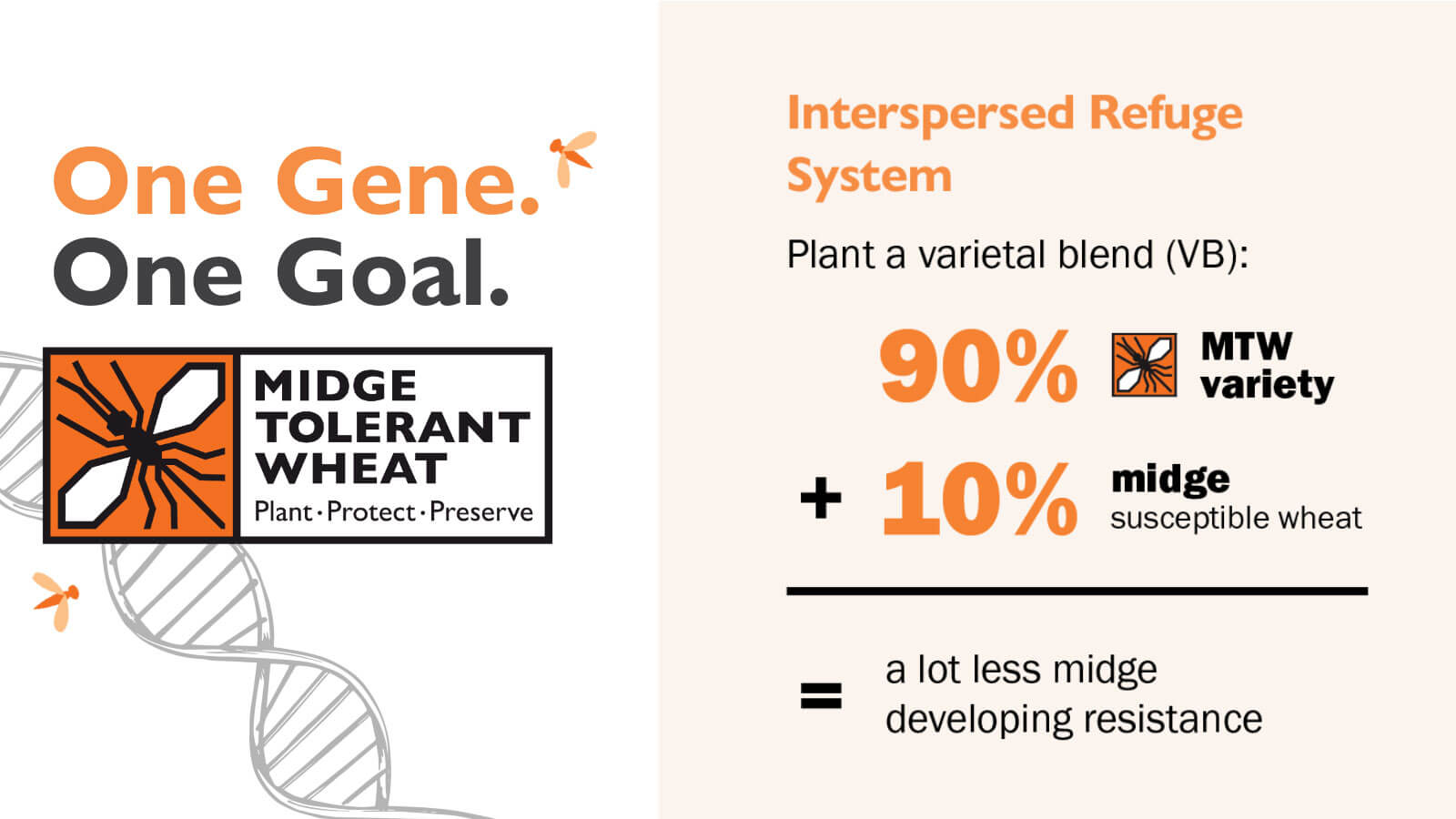
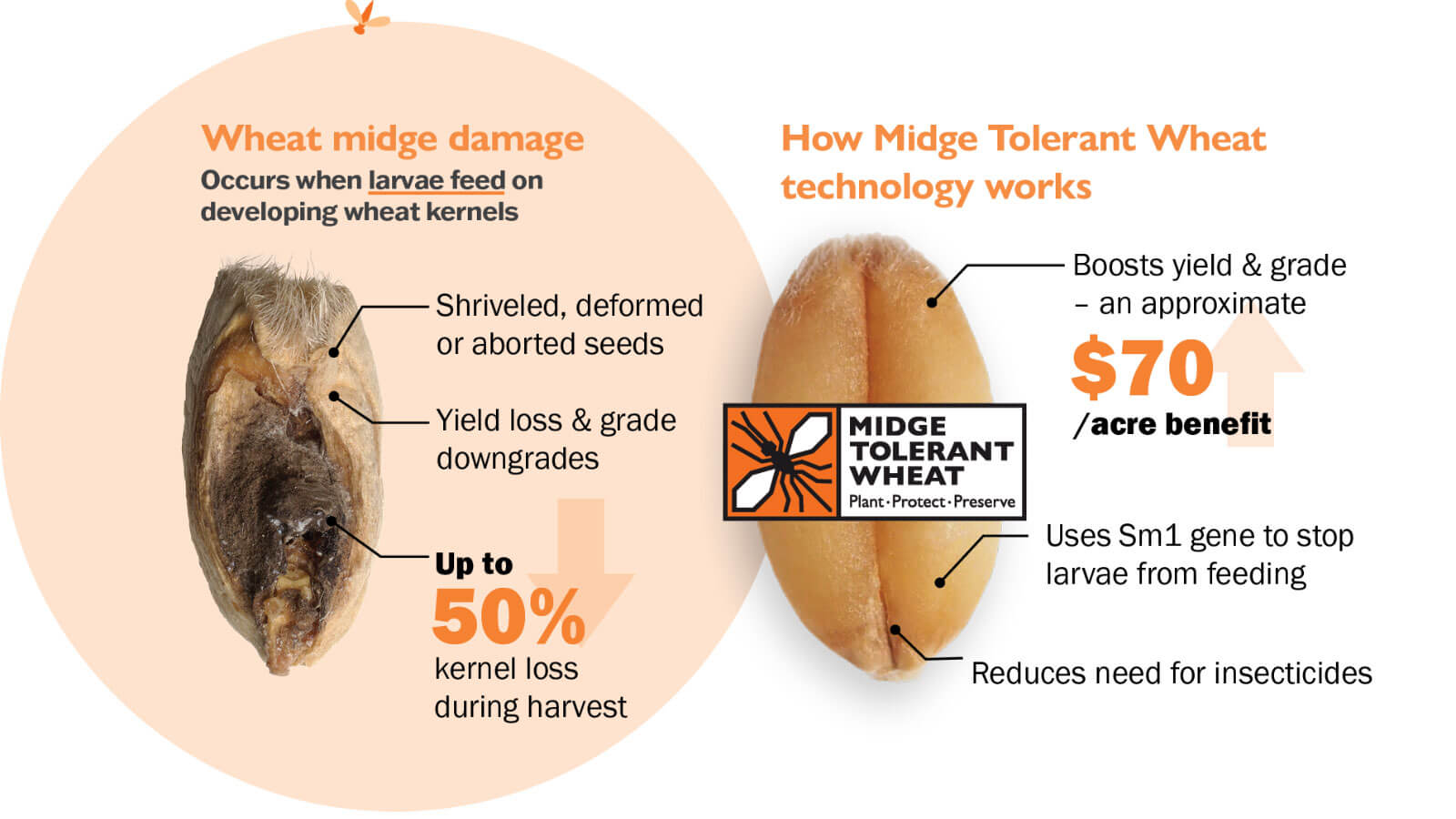
During the 2025–26 season, the CWRC advanced its Midge Tolerant Wheat (MTW) stewardship program through a co-ordinated campaign focused on awareness, education and industry collaboration — equipping growers, retailers, seed growers and industry partners with timely information and tools to protect the long-term effectiveness of MTW technology.
The campaign expanded stewardship outreach through targeted digital advertising, social media, email marketing and partner communications. Digital advertising across Google, Glacier FarmMedia, RealAgristudies and Kijiji generated more than 8.2 million impressions, while email campaigns achieved strong engagement among growers and retailers. This kept stewardship messaging top of mind throughout the growing season, while driving audiences to key online resources.
A major milestone this year was the launch of a new stewardship infographic, providing retailers with a practical reference to reinforce their stewardship commitments. The resource became a central component of the campaign and was featured on the MTW website, Stewardship Assurance Site, social channels, digital advertising and partner toolkits to ensure consistent messaging across all touchpoints. The Retailer Training Program also underwent a comprehensive review to enhance content, accessibility and user experience, supporting continued adoption of stewardship best practices.
The MTW website received several important updates, including the addition of the stewardship infographic to the Seed Growers & Retailers page and the launch of a new Wheat Midge Survey Map feature on the Forecasts page. These enhancements provided growers with additional tools to monitor midge pressure and make informed stewardship decisions.
Through co-ordinated communications and shared resources, the 2025–26 campaign increased awareness, supported responsible technology use and reinforced the collective commitment to protecting MTW for future generations.
Financials
The CWRC’s 2025-26 audited financial statements can be viewed here.